In foreign countries, there are lots of ways to fail at finding and eating the food you have so carefully researched ahead of time.
Vietnam specializes in the unauthorized duplication of famous stalls, presenting you with the quandary, for example, of three seemingly identical banh xeo stands facing each other across an alley. Korea likes to write its menus in a loopy, highly stylized script on wooden planks deep inside the dining room, where it would be exceedingly awkward to stand for minutes with face buried in Google Translate. China likes to run out of whatever the restaurant specializes in right as you arrive, even if you arrive at 6am. Malaysia goes a simpler route and just makes it impossible to walk anywhere.
Hokkaido, however, has taken all my memories of frustrated, fruitless city-wandering and shoves them aside. All restaurants are where they say they are, and if they don’t have lacquered replicas of their dishes in display cases outside, they have colorful posters, and if they don’t have colorful posters, they have a waiter willing to parse my halting hiragana-reading.
Unagi Kamogawa is wallpapered around the outer door with shiny but simple images of eel. Eel in round bowls and eel in square bowls – that’s it. I step into a den thick with eelsmoke, take off my shoes, and practically trip down into the space beneath the squatting table. A customer with one protruding bottom tooth and slow but confident English tells me he only eats eel once a month because it’s so expensive. It is – my round bowl is ¥2200 – but the two thick fillets are more smoky and tender than sweet and cloying, have only tiny flexible little bones that yield easily to my swallowing, and come with pickled vegetables and a clear soup featuring a mystery spring-onion-looking thing that tastes a little like a fish cake.
Sapporo’s Nijo market solves my ever-present problem at seafood markets: seeing all this delicious seafood but being unable to do anything with a giant horsehair crab or tank of abalone in my hostel/Airbnb. Next to the tanks of waving tentacles and claws and bubbling shells, there are restaurants, and the restaurants will put any combination of the market’s wares in a rice bowl for you. Again, it’s pricey, but ¥3800 gets me a sea urchin/salmon/salmon roe kaisen-don accompanied by a bowl of miso soup with, no exaggeration, half a crab tilted out of the side as if to mount a too-late escape attempt. The urchin is so soft and indistinct that it looks like scrambled eggs, usually bad news for a creature that gets runnier the longer it’s out of its shell, but it’s so mild and sweet that perhaps even avowed uni-haters would reconsider. It stains the rice under it sun-yellow, a welcome leftover after disappearing so quickly.
Oddly, the urchin here is better than in Otaru, the port where they actually capture them. Otaru’s kaisen-donlets me sample two different species of urchin, the northern variety and the short-spined variety, and while both are firm-edged, their flavor is tinged with iodine, and one’s color is somewhat greenish. Both would be laudable in a US sushi bar, but compared to Sapporo’s scrambled-eggy urchin, they pale. The winner in the Otaru bowl is the giant mound of crab meat next to it, taking up fully half the bowl and remaining sweet and stringily flavorful to the last mouthful. I always feel weirdly decadent eating chopstickfuls of crab meat, knowing the work it takes to extract just one strand from a shell, and as if to underline my uneasiness, they place a crab claw across the bowl with half the shell cleanly removed to reveal a perfect, untouched, still-claw-shaped wall of meat, ripe for the taking.
But one can’t always spend $30 on unagi or kaisen-don, and this is where Japan’s unsung heroes step in: train station restaurants. They always have English-speaking workers, and JR Sapporo Station is so much more than a train station, so it may be unfair to call its food train station food, but still: it’s a mall – actually three malls – two subway stations, and an underground tunnel to ensure continued commerce even during Hokkaido’s long winters. And it provides me with:
– legitimately excellent soba (studded with melt-in-your-mouth shrimp tempura and a tidy pile of tamago)
– airily-breaded tonkatsu surrounded by stuffed eggplant and shrimp, accompanied by mustard greens and silky chawanmushi
– a bowl filled with big chunks of soft tuna, bright green avocado, and that slimy white mass known as mountain yam that I usually hate, but that somehow ends up blended with rice to make a sticky-rice-like concoction, accompanied by gorgeously silky black sesame ice cream splashed with matcha ice.
Asahikawa Station, for its part, though only attached to a mere one mall, has a version of takoyaki that is perfectly cooked, incorporates greens into its batter and comes with a sour, zingy yuzu sauce. I pair it with a sugar-dusted green tea custard-filled taiyaki from a few stalls down.
While Japan may be lacking in the thrill of the chase, and therefore in providing me with the satisfaction that comes after having successfully chased a food item down, it’s kind of nice sometimes to just be able to decide what I want to eat, set off on an organized, efficient public transit system, and eat it!
Showing posts with label ice cream. Show all posts
Showing posts with label ice cream. Show all posts
Saturday, August 5, 2017

Monday, July 24, 2017
Flying Through Lemon Meringue Pie
The ground staff at Tokyo Haneda airport, tiny uniformed Lego people from the window of the 767, wave and bob and bow and salute excitedly at our Asahikawa-bound plane like they’re from the 1940’s when families still gathered to wave their handkerchiefs at departing airplanes.
We rise through so many layers of smog-yellow clouds that it feels as though we’re flying through lemon meringue pie, but when, an hour an a half later, we break through them again on the way down, I see a totally unfamiliar landscape. Someone has sliced the very top layer off of the Midwestern United States, big square plots and cows and crops at all, and set it down like a quilt over mostly rolling but occasionally jagged hills. But in the distance, flat-topped volcanoes rise through the misty clouds, and in the even farther distance, the sparkling curve of the ocean appears, a sweeping peninsula cutting into it. As we bank to make our landing, double-peaked Daisetsuzan suddenly rises close on the right, still slightly snowy in July.
The fact that American Airlines’ idea of a vegetarian meal had been white rice with boiled cauliflower on top, along with the fact that I had chosen to go to the Saryo Itoen at Haneda and eat matcha green tea ice cream with red beans and mochi instead of anything resembling an actual dinner, catches up with me in a big way as I ride the bus from Asahikawa airport to downtown. Briefly, I curse my luck arriving so late when there will almost certainly be no restaurants open to feed me, nor energy to sit down and have a meal even if any were, but when I alight I remember – duh – I’m in Japan, where the nearest 7-11 will give me delicious onigiri (rice balls) fit for a queen, and the nearest corner will overflow with drink vending machines.
So, at 9:00pm, munching on delicious cod roe and horseradish wrapped in rice and seaweed with one hand and drinking lemon-flavored coconut water with the other, I navigate the dark, deserted-but-for-the-occasional-businessman-on-a-bicycle streets to my hostel.
We rise through so many layers of smog-yellow clouds that it feels as though we’re flying through lemon meringue pie, but when, an hour an a half later, we break through them again on the way down, I see a totally unfamiliar landscape. Someone has sliced the very top layer off of the Midwestern United States, big square plots and cows and crops at all, and set it down like a quilt over mostly rolling but occasionally jagged hills. But in the distance, flat-topped volcanoes rise through the misty clouds, and in the even farther distance, the sparkling curve of the ocean appears, a sweeping peninsula cutting into it. As we bank to make our landing, double-peaked Daisetsuzan suddenly rises close on the right, still slightly snowy in July.
The fact that American Airlines’ idea of a vegetarian meal had been white rice with boiled cauliflower on top, along with the fact that I had chosen to go to the Saryo Itoen at Haneda and eat matcha green tea ice cream with red beans and mochi instead of anything resembling an actual dinner, catches up with me in a big way as I ride the bus from Asahikawa airport to downtown. Briefly, I curse my luck arriving so late when there will almost certainly be no restaurants open to feed me, nor energy to sit down and have a meal even if any were, but when I alight I remember – duh – I’m in Japan, where the nearest 7-11 will give me delicious onigiri (rice balls) fit for a queen, and the nearest corner will overflow with drink vending machines.
So, at 9:00pm, munching on delicious cod roe and horseradish wrapped in rice and seaweed with one hand and drinking lemon-flavored coconut water with the other, I navigate the dark, deserted-but-for-the-occasional-businessman-on-a-bicycle streets to my hostel.
Thursday, July 13, 2017
Portland: Food Carts and the Surface of the World
“Don’t miss the food carts,” said pretty much everyone when I mentioned I was visiting Portland.
Having never been to a city in the US where semipermanent food cart encampments were allowed (cities in China, Korea, Malaysia, etc, sure, but not in the US) I sort of blew off this advice, figuring they meant something like a food truck gathering, which in LA is now synonymous with hordes of hipsters, $20 parking, and hour-long lines.
What they meant, it turns out, is that on random street corners throughout the city, the edges of parking lots are full of trailers, RVs, converted buses, wheel-less or wheeled trucks, or tiny houses, serving food from all over the world. They have weird hours and even weirder seating options, and look a lot like the encampments at Slab City, but their menus are overall pretty mouthwatering-looking.
There’s a lot of emphasis on Middle Eastern food, and Egyptian and Iraqi food in particular. Dinner one night was a sabich, billed as a ‘Jewish-Iraqi breakfast’ – a soft, warm pita oozing a mixture of egg, hummus, pickled mango sauce, and eggplant guts all over the potatoes inside. This was from Wolf & Bear’s, which looked like one piece of an old-timey caravan, tucked pretty permanently in a parking lot across from a bookstore. I wish I had had time to get into the nuances of the differences between Egyptian, Iraqi, Lebanese, and Jordanian food, as the carts were pretty explicit about specifying their origin, but their menus looked identical: falafel, kabobs, hummus, dolmas, tabbouleh, etc.
On a different day, a failed attempt at eating at “the only Mauritian restaurant in the US” (apparently it has a ‘Closed When Out Of Food’ policy) led me to hold myself over with some Haitian meat pies and a papaya smoothie at Caribbean Kitchen next door. The pies’ dough was perfectly light and flaky, graduating slowly into a melty symbiosis with the meat filling, which felt like all its spices had been muted.
Thus over-breaded, I stole bites here and there of my companion’s vegan hiyashi ramen, an angry red cauldron of shichimi togarashi (Japanese seven spice), oil, mushrooms, cabbages, and very al dente noodles. The overall effect was somewhere between that chunky red pepper paste served at dim sum restaurants and a mushroom salad dressed in oil. Not one to shy away from excessive oil, my lunch the next day was a plate of meat oil-soaked kielbasa, pierogi, and cabbage stew from a cart at the Saturday market.
Some non-food cart adventures included a vegetarian combination Ethiopian lunch plate, trendy ‘Korean-fusion restaurant‘ (I put this in quotes because there was very little Korean about my honey-anchovy encrusted potato chips, Dungeness crab seaweed noodle concoction, or the okay-I-guess-vaguely-Korean-esque scordalia pancake topped with gravlax and greens), a ramen joint that didn’t skimp on the Sichuan peppercorns (yes, Sichuan hot-pot-inspired ramen!), and an outrageously tasty goat-milk/marionberry jam/habanero ice cream. Right before leaving, I enjoyed a neat, spare, and walnut-brea-accompanied Swedish hash with trout, getting to the restaurantmere minutes before the rest of Portland.
It sounds like I had a world-traipsingly good time, and I did, in a way. If you want a the most accessible tour of the culinary surface of the world, you can’t do much better than Portland. However, my travel-scarred tastebuds tell me that it was just that: the surface. Nowhere were my preconceptions or preferences challenged, my mouth heated to more than a ‘mild’ (except for in the case of the Sichuan peppercorn ramen), or my horizons expanded. Everything I ate was well within the comfort zone of the average mildly adventurous American. Not once did I have to try and parse an unfamiliar language or a questionable translation, make an embarrassing faux-pas, or feel like a visitor to a different culture’s space.
It felt like everything was being marketed TO me -or at least the part of me that exists as a white American culinary tourist. I was the intended audience. Not the people whose culture’s food was being marketed.
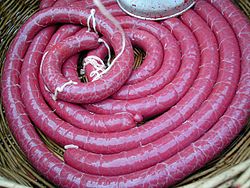
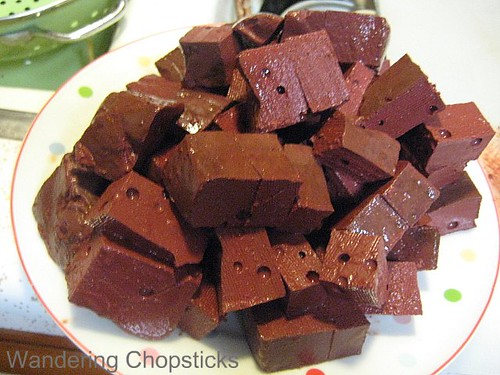
I’m not knocking Portland for this, necessarily. If you want to make the most money, you obviously want to market to your biggest, well, market, and in Portland, maybe that’s the mainly white American culinary tourist. And maybe this kind of dabbling leads to more people being more open and experimental with food choices. I didn’t start out eating pork knuckles and beef tendons. First I needed to know that pork knuckles and beef tendons were food and were being served at restaurants. Others may need a larger shove than just awareness: first sausage, then blood sausage, then blood cubes, then raw goat blood pudding, for example?
Still, such extreme accessibility, no matter how convenient and at times even tasty, feels weird and a little icky. I’d rather pay a steeper price of admission into another culture’s universe.
My favorite thing about Portland was something that needed no marketing at all: the local berries! Vancouver (Washington)’s farmers market provided me with all the marionberries, tiny strawberries, and Rainier cherries that I could eat, and the flavors were so wholly different from anything available in California that they instantly made the whole trip worth it.
Having never been to a city in the US where semipermanent food cart encampments were allowed (cities in China, Korea, Malaysia, etc, sure, but not in the US) I sort of blew off this advice, figuring they meant something like a food truck gathering, which in LA is now synonymous with hordes of hipsters, $20 parking, and hour-long lines.
What they meant, it turns out, is that on random street corners throughout the city, the edges of parking lots are full of trailers, RVs, converted buses, wheel-less or wheeled trucks, or tiny houses, serving food from all over the world. They have weird hours and even weirder seating options, and look a lot like the encampments at Slab City, but their menus are overall pretty mouthwatering-looking.
There’s a lot of emphasis on Middle Eastern food, and Egyptian and Iraqi food in particular. Dinner one night was a sabich, billed as a ‘Jewish-Iraqi breakfast’ – a soft, warm pita oozing a mixture of egg, hummus, pickled mango sauce, and eggplant guts all over the potatoes inside. This was from Wolf & Bear’s, which looked like one piece of an old-timey caravan, tucked pretty permanently in a parking lot across from a bookstore. I wish I had had time to get into the nuances of the differences between Egyptian, Iraqi, Lebanese, and Jordanian food, as the carts were pretty explicit about specifying their origin, but their menus looked identical: falafel, kabobs, hummus, dolmas, tabbouleh, etc.
On a different day, a failed attempt at eating at “the only Mauritian restaurant in the US” (apparently it has a ‘Closed When Out Of Food’ policy) led me to hold myself over with some Haitian meat pies and a papaya smoothie at Caribbean Kitchen next door. The pies’ dough was perfectly light and flaky, graduating slowly into a melty symbiosis with the meat filling, which felt like all its spices had been muted.
Thus over-breaded, I stole bites here and there of my companion’s vegan hiyashi ramen, an angry red cauldron of shichimi togarashi (Japanese seven spice), oil, mushrooms, cabbages, and very al dente noodles. The overall effect was somewhere between that chunky red pepper paste served at dim sum restaurants and a mushroom salad dressed in oil. Not one to shy away from excessive oil, my lunch the next day was a plate of meat oil-soaked kielbasa, pierogi, and cabbage stew from a cart at the Saturday market.
Some non-food cart adventures included a vegetarian combination Ethiopian lunch plate, trendy ‘Korean-fusion restaurant‘ (I put this in quotes because there was very little Korean about my honey-anchovy encrusted potato chips, Dungeness crab seaweed noodle concoction, or the okay-I-guess-vaguely-Korean-esque scordalia pancake topped with gravlax and greens), a ramen joint that didn’t skimp on the Sichuan peppercorns (yes, Sichuan hot-pot-inspired ramen!), and an outrageously tasty goat-milk/marionberry jam/habanero ice cream. Right before leaving, I enjoyed a neat, spare, and walnut-brea-accompanied Swedish hash with trout, getting to the restaurantmere minutes before the rest of Portland.
It sounds like I had a world-traipsingly good time, and I did, in a way. If you want a the most accessible tour of the culinary surface of the world, you can’t do much better than Portland. However, my travel-scarred tastebuds tell me that it was just that: the surface. Nowhere were my preconceptions or preferences challenged, my mouth heated to more than a ‘mild’ (except for in the case of the Sichuan peppercorn ramen), or my horizons expanded. Everything I ate was well within the comfort zone of the average mildly adventurous American. Not once did I have to try and parse an unfamiliar language or a questionable translation, make an embarrassing faux-pas, or feel like a visitor to a different culture’s space.
It felt like everything was being marketed TO me -or at least the part of me that exists as a white American culinary tourist. I was the intended audience. Not the people whose culture’s food was being marketed.
I’m not knocking Portland for this, necessarily. If you want to make the most money, you obviously want to market to your biggest, well, market, and in Portland, maybe that’s the mainly white American culinary tourist. And maybe this kind of dabbling leads to more people being more open and experimental with food choices. I didn’t start out eating pork knuckles and beef tendons. First I needed to know that pork knuckles and beef tendons were food and were being served at restaurants. Others may need a larger shove than just awareness: first sausage, then blood sausage, then blood cubes, then raw goat blood pudding, for example?

Still, such extreme accessibility, no matter how convenient and at times even tasty, feels weird and a little icky. I’d rather pay a steeper price of admission into another culture’s universe.
My favorite thing about Portland was something that needed no marketing at all: the local berries! Vancouver (Washington)’s farmers market provided me with all the marionberries, tiny strawberries, and Rainier cherries that I could eat, and the flavors were so wholly different from anything available in California that they instantly made the whole trip worth it.
Sunday, October 20, 2013
Snacking across Asia, part I: Japan
If I had my way, I'd only sit down for one full meal a day. The rest of the time, I'd just wander around, trading coins for snacks whenever the mood or the vision struck me. I might gobble a handful of fruit in the early morning, gnaw on some dried meat or skewers of some sort in the late afternoon, pop some herbs for a fun flavor game whenever, and let the displays and coaxings of street vendors decide the rest.
Southeast Asia was a snacker's paradise. Most of the things on sticks that I picked up on a whim for less than 50 cents were tastier than any meal served to me on anything resembling a tablecloth - in the States or elsewhere.
Japan's snacks were harder to come by, usually ensconced in mall hell, and much more expensive, but its gems were among the most delicious.
1. Tokyo: Hotok
We stayed in the Little Korea of Tokyo: Shin-Okubo. This meant that there were barbecue joints everywhere, which didn't faze me one way or another, but it also meant a preponderance of the Japanese take on Korean ho-tteok: rice 'pancakes' full of, well, in Korea it was almost always brown sugar and walnuts or pepitas, but in Japan it was whatever anyone felt like throwing in there.
Manning my favorite hotok stand was a trilingual, teenaged Korean national with his long hair always wrapped in a bandanna, trapped in Tokyo for some reason that remained undisclosed due either to language barriers or sensitivity. He was jolly, correcting my noob mistake of trying to hand him money rather than feed it to the coin-taking machine on the right. He had the ability to cook at least 5 pancakes at once, flipping them casually as he catered to the throngs of teenage girls flirting with him across the counter.
Over my three days there, I got a classic seeds'n'sugar version, a sweet potato version, and a ham and cheese. Korean sovereignty won out here: the classic was still the best, filled to bursting with oozing brown crystals.
2. Osaka: Dried kumquats
With two new hostel friends, we were on our way to sample the takoyaki on an all-new side of town (this is how it went in Osaka: move hostels, immediately try local takoyaki). A man stood proudly under a big awning with a staggering array of dried fruit spread out around him. He held samples out to us in that confident, cool, kind of ambivalent way where you could tell it wasn't any skin off his back whether we tried some or not because he was just going to go on selling the best dried fruit in the city.
That kind of attitude persisted as I tried some blueberries, gasped in delight, filled my bags lightly with these, persimmons, cranberries, strawberries, and kumquats, let him weigh them, was told my exuberance would cost me $55, sadly dumped out all but but the kumquats and blueberries, was told this was still going to be $25, dumped out the blueberries, and left his stand somewhat in price shock, $8 poorer, but in possession of about 15 dried kumquats.
I was grumbly about the whole thing (and we had to hide from the dried fruit man on the way home) but I was soon to discover that I should have bought kilos of these kumquats at any price. Though dried, they were still juicy, and their crispy sugared outsides collapsed inward when bitten like bittersweet creme brulée.
3. Osaka: Black sesame ice cream with green tea ice and mochi
This cute green tea bar was located on the seventh floor of a big, showy mall in Namba, and just heaving myself onto the escalator for each of these flights made my poor stomach turn. I had just eaten an unbelievably rich bowl of pork rib ramen (the last dish described in this entry) and badly needed something refreshing.

$6 got us this goblet of black sesame ice cream, black, thick and gooey like a sphere of delicious tar, surrounded with icy sweet green tea foam. The ice cream wasn't even a little sweet. It was concentrated, smoothed out seed. The mochi balls were superfluous; I ignored them. Japanese music box version of songs from the Little Mermaid tinkled overhead. We sang along, utterly inappropriately for Japan.
Next time: Chinese snacks!
Southeast Asia was a snacker's paradise. Most of the things on sticks that I picked up on a whim for less than 50 cents were tastier than any meal served to me on anything resembling a tablecloth - in the States or elsewhere.
Japan's snacks were harder to come by, usually ensconced in mall hell, and much more expensive, but its gems were among the most delicious.
1. Tokyo: Hotok
We stayed in the Little Korea of Tokyo: Shin-Okubo. This meant that there were barbecue joints everywhere, which didn't faze me one way or another, but it also meant a preponderance of the Japanese take on Korean ho-tteok: rice 'pancakes' full of, well, in Korea it was almost always brown sugar and walnuts or pepitas, but in Japan it was whatever anyone felt like throwing in there.
Manning my favorite hotok stand was a trilingual, teenaged Korean national with his long hair always wrapped in a bandanna, trapped in Tokyo for some reason that remained undisclosed due either to language barriers or sensitivity. He was jolly, correcting my noob mistake of trying to hand him money rather than feed it to the coin-taking machine on the right. He had the ability to cook at least 5 pancakes at once, flipping them casually as he catered to the throngs of teenage girls flirting with him across the counter.
Over my three days there, I got a classic seeds'n'sugar version, a sweet potato version, and a ham and cheese. Korean sovereignty won out here: the classic was still the best, filled to bursting with oozing brown crystals.
2. Osaka: Dried kumquats
With two new hostel friends, we were on our way to sample the takoyaki on an all-new side of town (this is how it went in Osaka: move hostels, immediately try local takoyaki). A man stood proudly under a big awning with a staggering array of dried fruit spread out around him. He held samples out to us in that confident, cool, kind of ambivalent way where you could tell it wasn't any skin off his back whether we tried some or not because he was just going to go on selling the best dried fruit in the city.
That kind of attitude persisted as I tried some blueberries, gasped in delight, filled my bags lightly with these, persimmons, cranberries, strawberries, and kumquats, let him weigh them, was told my exuberance would cost me $55, sadly dumped out all but but the kumquats and blueberries, was told this was still going to be $25, dumped out the blueberries, and left his stand somewhat in price shock, $8 poorer, but in possession of about 15 dried kumquats.
I was grumbly about the whole thing (and we had to hide from the dried fruit man on the way home) but I was soon to discover that I should have bought kilos of these kumquats at any price. Though dried, they were still juicy, and their crispy sugared outsides collapsed inward when bitten like bittersweet creme brulée.
3. Osaka: Black sesame ice cream with green tea ice and mochi
This cute green tea bar was located on the seventh floor of a big, showy mall in Namba, and just heaving myself onto the escalator for each of these flights made my poor stomach turn. I had just eaten an unbelievably rich bowl of pork rib ramen (the last dish described in this entry) and badly needed something refreshing.

$6 got us this goblet of black sesame ice cream, black, thick and gooey like a sphere of delicious tar, surrounded with icy sweet green tea foam. The ice cream wasn't even a little sweet. It was concentrated, smoothed out seed. The mochi balls were superfluous; I ignored them. Japanese music box version of songs from the Little Mermaid tinkled overhead. We sang along, utterly inappropriately for Japan.
Next time: Chinese snacks!
Subscribe to:
Posts (Atom)