I’ve noticed that many (if not most) of my most enjoyable meals are preceded by a waiter or waitress trying their best to dissuade me from ordering them.
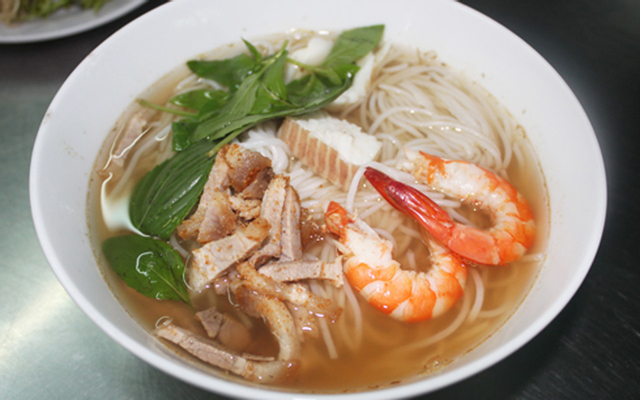
Bún Nước Lèo Sóc Trăng at Sóc Trăng Restaurant: “This soup…a little bit stink.” (while holding nose)
Bún Mắm Nước Lèo Bạc Liêu at Thanh Mai: “Even some Vietnamese people don’t like it.”
Bún Mít Mắm Nêm at Ngự Bình: “This dish, I think, not for you.”
Oc Len Xao Dua at C&C Express: “Uh, you know snail, right?!”
Hột Vịt Lộn at Hột Vịt Lộn Long An : “Egg with BABY.” (Direct, meaningful eye contact.)
Thịt Heo Luộc Cuốn Tôm Chua at Huế Ơi: “The shrimp is fermented! Pickled. If you don’t like it I will replace it for you.” (Later, watching me take – and enjoy – each bite: “Is it OK? I will replace it with something else!”)
Ốc Lá Lốt at Chả Ốc Gia Huy: “You know… we have grilled pork too.”
Lest you think it’s just Vietnamese places warning me about fish sauce, anchovy paste, or some iteration of fermented sea creature:
Udang Sambal Petai at Mutiara: “Have you had this before? Maybe you shouldn’t.” (After pressing for more information: “When you go to the bathroom it will smell.”)
Shirako at Ohshima: “Do you know shirako? I will tell you what it is after you eat it.”
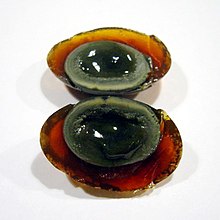
Preserved Egg With Eggplant and Chili at Xi An Tasty: “So, this egg purple and green…”
Spicy Fish Paste Curry at Yoma Myanmar: “Not fish… fish paste. Not the same.”
Etc., etc.
This is embarrassing to admit, but before I gave it careful thought, this type of thing used to really offend me. I felt discriminated against as a white person (I KNOW, but I was in my twenties) and that it wasn’t fair that everyone assumed my tastebuds would prefer all the mainstream, bland menu items. I’m so misunderstood. Why must people judge my tastebuds by the color of my skin? I would lament as I added way too much purple shrimp paste to my baby clam salad just to prove a point to the waitress (who was not watching and did not care).
Finally, I came to the simple realization that everyone just wants the people they feed to like the food they feed them. That’s why my family used to try so hard to cook for my vegetarian ex-boyfriend despite a) not agreeing with his dietary choices and b) him preferring to just eat cereal anyway. They wanted his tastebuds (even though they thought that his tastebuds were stupid) to enjoy themselves. They wanted him to feel cared for and considered.
No restaurant wants to shock a new customer out of her presumed comfort zone with a brined, weeks-dried green and purple mushy gelatinous egg, and have her throw up or scream or cry and make a scene. Obviously. But it also doesn’t want the customer to suffer in silence or even be quietly unpleasantly surprised with all the weirdness happening in her mouth. They just want her to enjoy her food. And assuming that a white customer is going to be unfamiliar with – and perhaps offended by – fermented shrimp paste or fish testicles or duck fetuses or snails is not at all unreasonable.
It’s great that I have become more tolerant of people treating me with human decency and all, but I still need to examine my affinity for trying the oddest-looking thing on the menu just because it’s the oddest-looking thing on the menu. There are some things I just plain straight-up actually love, like fish/shrimp/anchovy paste, cod testicles, and betel leaves, but there are other things, like duck fetuses and the slimy or rubbery types of snails (i.e. most of them), that I eat just because they’re not something I’d normally eat. In the best case scenario, this can be traced to my natural affinity for novelty. In the worst-case scenario, it reeks of exoticism, appropriation, and other fancy ways of describing individuals from dominant cultures being insensitive, bumbling jerks.
Realistically, it’s probably somewhere in the middle. I do believe that many of us narrow our experiences unnecessarily. When it comes to food, that tendency can cause harm. Only being open to eating certain parts of the animal, for example, leads to massive, widespread waste, with animals being killed for a mere fraction of their flesh. (Shark fin soup comes to mind here, as well as male baby chicks being slaughtered at birth.) Being open to all that is edible reduces waste and invites diversity of crops – which in turn provides them with some protection against pests/disease/natural disaster.
So maybe my insistence on trying the most unfamiliar thing on the menu is a little questionable on the cultural sensitivity scale, but the intention behind it is pure. Let’s hope the justification isn’t just a post-hoc scramble.
Showing posts with label tastebuds. Show all posts
Showing posts with label tastebuds. Show all posts
Wednesday, July 19, 2017




Wednesday, June 15, 2016
An Acquired Taste
Sometimes my sense of personal identity rewrites history. It has a such a strong sense of itself – myself – as an experimental eater that it assumes that Childhood Me constantly sought out new flavors, just like Current Me. It also takes Current Me’s negative attitude toward artificial flavors, sweeteners, and overly processed foods and extends them backwards, systematically wiping out memories of Childhood Me storing sour blue Warheads in her cheeks, begging her mom to buy Spaghetti-O’s, surviving all the way until seventh period lunch on daily cans of Dr. Pepper, and only being able to cook frozen dinners from age 16-20.
Recently I was talking to my mom about kids’ menus. I was (am) angry that they existed, because I thought (think) that catering to kids’ dumb preferences for boring, processed food both creates and reinforces such preferences, turning kids into Outback Steakhouse-seeking, Campbell’s soup-heating, Hard Rock Cafe-touring adults. “I never ate from a kids menu, did I?” I asked her confidently, sure I knew the answer already.
“Of course you did,” she responded, without even stopping to think. “You pretty much lived on bean and cheese burritos whenever we went to Mexican restaurants.”
Because I can’t conceive of making that choice now, I can’t conceive of having been the person who ever would have made that choice. I remember the parts of my childhood where I ate fish eyes on a dare, brought cream cheese and caviar sandwiches to preschool, and was the only kid in my group of friends to have tried sushi. I remember those things because those things fit with my narrative: that of the adventurous kid, becoming an adventurous eating evangelist.
Kids’ menus fit nowhere in that narrative. I have a knee-jerk negative reaction to them. When I’m sitting at a restaurant with an otherwise beautiful varied menu that chooses to offer children chicken fingers or a grilled cheese sandwich, I think, what is the message we’re sending here? Is it really that we’re catering to an inherently picky demographic whose tastebuds biologically prefer blandness? Or are we creating a false picky demographic by making that assumption?
This article argues that American children’s bland tastes were artificially created by an 1894 book called ‘The Care and Feeding of Children’, which was heavily referenced when kids’ menus came into existence during prohibition. The book claimed that fresh fruit, pastries, salty meats, lemonade, and other ‘fancy’ foods were to be reserved for adults. Prior to the publication of this book, which came as part of a larger scientific movement and era promoting different nutritional requirements for children, kids ate what adults ate.
But you can’t make the case that kids’ bland preferences aren’t wholly manufactured out of thin air. Children do have more tastebuds than adults (because adults’ tastebuds eventually stop regenerating) and so food tastes stronger to them. Basically, they’re supertasters. (Parenthetically, I know a self-proclaimed supertaster and she hates almost all ‘healthy’ food, and especially all vegetables.) Children also are programmed, as toddlers, to crave fat and sugar to gain energy and to avoid bitterness, which could have signaled poison back in ancient times when they were running around shoving unfamiliar plants from the forest into their mouths.
Why, then, do some children eat kimchi and borscht and carrots and peppers, while others subsist on foods marketed specifically for them, like chicken nuggets and mashed potatoes and fruit roll-ups? I’m pulling the lens back from the United States here: remember that set of photos that circulated early last year that showed what school lunches were like around the world? Here it is. Take a look. I can’t argue that these kids aren’t eating differently from their parents, as I’m not an expert on each type of cuisine pictured, but I can certainly argue that almost none of the international foods pictured in this set are as bland or texturally unchallenging as the American food pictured. Korea’s unsurprisingly, prominently features kimchi. That, plus Finland’s pickled beet and carrot salads and Greece’s vinegared dolmas, prove that acidity is not a dealbreaker for young palates, as the U.S. so often assumes it is by cutting out certain salad dressings or forgoing sharp sauces. Brazil’s bed of fresh arugula, Spain’s cut fresh peppers, and Ukraine’s cabbage show that raw veggies aren’t a no-go either, and that veggies don’t have to be boiled to mush to be enjoyed by children. And I mean, Ukraine features borscht. What could be more stereotypically offensive to most American children than a cold mushy soup made out of beets? What are other countries doing differently?
My guess (and this needs more research to substantiate) is that most other cultures don’t conceive of children’s palates and needs as a separate entity than the adults’; they simply, as in pre-1890’s America – make kids eat what the adults eat. This doesn’t mean that kids aren’t universally more particularly about what they are willing to try. I mean, the phrase ‘an acquired taste’ isn’t just something that appeared, baseless, out of thin air. Adventurousness seems not ingrained but earned, either through necessity (“there’s nothing else to eat!”) or a certain maturity (“this is going to be at least an interesting/broadening experience, and maybe I’ll even like it!”).
The former is foisted upon children by parents who take the approach of feeding their children what they themselves are eating: no other option. If the children don’t like it, the children go hungry. Eventually, they learn.
The latter comes – only sometimes – with age. I’d argue that children who are forced to experience the former are more likely to become the types of adults who reach the latter. While I don’t know anyone who sprang from the womb inherently frightened of ‘weird’ food like duck fetuses or pig’s blood, I also don’t know anyone who has overcome society’s judgments enough to try those things, preconceived notions firmly inculcated, without a little bit of gritting teeth and encouraging self-talk. Sometimes gritting teeth and encouraging self-talk is necessary to reach a point where a new food is fully appreciated and integrated into a diet! Personally, I had to pry apart a duck fetus with a fork until it didn’t resemble a bird anymore before I could eat balut for the first time; I didn’t know that the usual method involves scooping it out with a spoon, eyes averted or shut. I had to get over the fact that pig’s blood tasted like swallowing a mouthful of saliva after getting punched. Now I eat both things happily, because I appreciate the mingling of the flavors they often accompany: pate and Vietnamese coriander and salt and lime; iron and oxtail and lemongrass.
I feel my life would be less rich if not for these experiences, and I worry that American kids are being set up for a life of predictability when they’re not expected to cultivate an attitude of openness and curiosity towards food. I realize how pretentious this sounds, but it doesn’t change how I feel.
Recently I was talking to my mom about kids’ menus. I was (am) angry that they existed, because I thought (think) that catering to kids’ dumb preferences for boring, processed food both creates and reinforces such preferences, turning kids into Outback Steakhouse-seeking, Campbell’s soup-heating, Hard Rock Cafe-touring adults. “I never ate from a kids menu, did I?” I asked her confidently, sure I knew the answer already.
“Of course you did,” she responded, without even stopping to think. “You pretty much lived on bean and cheese burritos whenever we went to Mexican restaurants.”
Because I can’t conceive of making that choice now, I can’t conceive of having been the person who ever would have made that choice. I remember the parts of my childhood where I ate fish eyes on a dare, brought cream cheese and caviar sandwiches to preschool, and was the only kid in my group of friends to have tried sushi. I remember those things because those things fit with my narrative: that of the adventurous kid, becoming an adventurous eating evangelist.
Kids’ menus fit nowhere in that narrative. I have a knee-jerk negative reaction to them. When I’m sitting at a restaurant with an otherwise beautiful varied menu that chooses to offer children chicken fingers or a grilled cheese sandwich, I think, what is the message we’re sending here? Is it really that we’re catering to an inherently picky demographic whose tastebuds biologically prefer blandness? Or are we creating a false picky demographic by making that assumption?
This article argues that American children’s bland tastes were artificially created by an 1894 book called ‘The Care and Feeding of Children’, which was heavily referenced when kids’ menus came into existence during prohibition. The book claimed that fresh fruit, pastries, salty meats, lemonade, and other ‘fancy’ foods were to be reserved for adults. Prior to the publication of this book, which came as part of a larger scientific movement and era promoting different nutritional requirements for children, kids ate what adults ate.
But you can’t make the case that kids’ bland preferences aren’t wholly manufactured out of thin air. Children do have more tastebuds than adults (because adults’ tastebuds eventually stop regenerating) and so food tastes stronger to them. Basically, they’re supertasters. (Parenthetically, I know a self-proclaimed supertaster and she hates almost all ‘healthy’ food, and especially all vegetables.) Children also are programmed, as toddlers, to crave fat and sugar to gain energy and to avoid bitterness, which could have signaled poison back in ancient times when they were running around shoving unfamiliar plants from the forest into their mouths.
Why, then, do some children eat kimchi and borscht and carrots and peppers, while others subsist on foods marketed specifically for them, like chicken nuggets and mashed potatoes and fruit roll-ups? I’m pulling the lens back from the United States here: remember that set of photos that circulated early last year that showed what school lunches were like around the world? Here it is. Take a look. I can’t argue that these kids aren’t eating differently from their parents, as I’m not an expert on each type of cuisine pictured, but I can certainly argue that almost none of the international foods pictured in this set are as bland or texturally unchallenging as the American food pictured. Korea’s unsurprisingly, prominently features kimchi. That, plus Finland’s pickled beet and carrot salads and Greece’s vinegared dolmas, prove that acidity is not a dealbreaker for young palates, as the U.S. so often assumes it is by cutting out certain salad dressings or forgoing sharp sauces. Brazil’s bed of fresh arugula, Spain’s cut fresh peppers, and Ukraine’s cabbage show that raw veggies aren’t a no-go either, and that veggies don’t have to be boiled to mush to be enjoyed by children. And I mean, Ukraine features borscht. What could be more stereotypically offensive to most American children than a cold mushy soup made out of beets? What are other countries doing differently?
My guess (and this needs more research to substantiate) is that most other cultures don’t conceive of children’s palates and needs as a separate entity than the adults’; they simply, as in pre-1890’s America – make kids eat what the adults eat. This doesn’t mean that kids aren’t universally more particularly about what they are willing to try. I mean, the phrase ‘an acquired taste’ isn’t just something that appeared, baseless, out of thin air. Adventurousness seems not ingrained but earned, either through necessity (“there’s nothing else to eat!”) or a certain maturity (“this is going to be at least an interesting/broadening experience, and maybe I’ll even like it!”).
The former is foisted upon children by parents who take the approach of feeding their children what they themselves are eating: no other option. If the children don’t like it, the children go hungry. Eventually, they learn.
The latter comes – only sometimes – with age. I’d argue that children who are forced to experience the former are more likely to become the types of adults who reach the latter. While I don’t know anyone who sprang from the womb inherently frightened of ‘weird’ food like duck fetuses or pig’s blood, I also don’t know anyone who has overcome society’s judgments enough to try those things, preconceived notions firmly inculcated, without a little bit of gritting teeth and encouraging self-talk. Sometimes gritting teeth and encouraging self-talk is necessary to reach a point where a new food is fully appreciated and integrated into a diet! Personally, I had to pry apart a duck fetus with a fork until it didn’t resemble a bird anymore before I could eat balut for the first time; I didn’t know that the usual method involves scooping it out with a spoon, eyes averted or shut. I had to get over the fact that pig’s blood tasted like swallowing a mouthful of saliva after getting punched. Now I eat both things happily, because I appreciate the mingling of the flavors they often accompany: pate and Vietnamese coriander and salt and lime; iron and oxtail and lemongrass.
I feel my life would be less rich if not for these experiences, and I worry that American kids are being set up for a life of predictability when they’re not expected to cultivate an attitude of openness and curiosity towards food. I realize how pretentious this sounds, but it doesn’t change how I feel.
Subscribe to:
Posts (Atom)